

Spring Planting and Pre-Sidedress Nitrogen Testing
Pre-Sidedress Nitrogen Testing remains one of the most effective tools available to reduce guesswork and fine-tune nitrogen decisions during the growing season.
As spring planting progresses, nitrogen management quickly becomes one of the most critical—and challenging—decisions for corn production. Growers want to move fast, get corn sidedressed, and stay ahead of the weather. Consultants, meanwhile, are tasked with recommending nitrogen rates that maximize yield, protect profitability, and reduce unnecessary losses.
Pre-Sidedress Nitrogen Testing (PSNT) remains one of the most effective tools available to reduce guesswork and fine-tune nitrogen decisions during the growing season.
What Is PSNT and Why It Matters
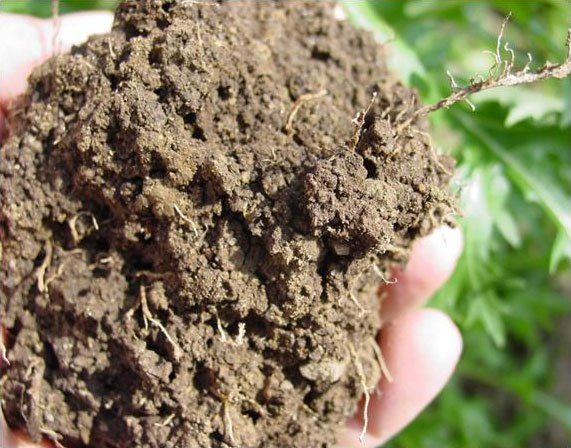
Extensive research has led to the development of the late-spring nitrogen soil test—commonly referred to as PSNT. This test was designed specifically to help consultants assess how much plant-available nitrogen is already present in the soil just before sidedress applications.
Rather than relying solely on planned rates or assumptions about nitrogen carryover, PSNT provides a snapshot of inorganic soil nitrogen that can be used to adjust sidedress rates with confidence.
For PSNT to be effective, sampling timing is critical.
- Sample when corn is 6–12 inches tall (15–30 cm)
- Later within that window is better
This timing aligns with university calibration data and allows more soil nitrogen from organic matter, manure, and cover crops to mineralize into plant-available forms. Sampling too early, when soils are still cool, often underestimates nitrogen contributions from these organic pools.
As soil temperatures rise, microbial activity increases dramatically, releasing nitrate (NO₃⁻) and ammonium (NH₄⁺). Waiting long enough to capture this activity is essential for accurate recommendations.
While some universities have published calibrations for deeper samples (3–4 feet), the majority of research shows that a 12-inch (30 cm) soil sample is ideal for PSNT.
All Brookside Labs’ calibration data for PSNT assumes a 12-inch depth. Sampling deeper or shallower than this can lead to results that do not align with established interpretation guidelines.
Brookside Labs also reports NH₄-N, which can be especially important in systems using manure, sludge, or other organic nitrogen sources. Amplify Consultants can generally assume that most NH₄-N will convert to NO₃-N during the growing season.
Some states include NH₄-N in their interpretation guidelines. For example:
- Iowa considers:
- 20–25 ppm NO₃-N alone, or
- ~31 ppm combined NO₃-N + NH₄-N as ideal
Understanding Background Nitrogen Levels
One important consideration with PSNT is recognizing natural background soil nitrogen, the inorganic nitrogen that would be present from normal vegetation and organic matter mineralization, even without fertilizer additions.
Background levels vary significantly by region. For example:
- Virginia soils might naturally contain ~3 ppm NO₃-N and 1.5 ppm NH₄-N
- Minnesota soils may be closer to ~6 ppm NO₃-N and 5 ppm NH₄-N
PSNT extracts both naturally occurring inorganic nitrogen and nitrogen that has been added through fertilizers, manure, or mineralized organic matter. Understanding local background levels helps consultants better interpret test results and avoid over-application.
The Challenge: Cool Soils and Organic Nitrogen
One of the biggest limitations of PSNT is sampling too early. As corn planting dates move earlier each year, there is increasing pressure to sidedress nitrogen immediately after planting, when the soil is still cool. Cool soils slow microbial activity, delaying the release of nitrogen from:
- Organic matter
- Cover crop residues
- Manure applications
In these conditions, PSNT alone may underestimate the total nitrogen that will become available later in the season. To address this challenge, Brookside Labs developed the nitrogen mineralization test. This analysis measures soil microbial activity under ideal conditions to estimate how much nitrogen will be released during the growing season. When paired with PSNT, consultants gain a more complete nitrogen picture:
- PSNT: Measures current inorganic N (NO₃-N + NH₄-N)
- Nitrogen mineralization: Estimates future nitrogen release from organic sources
This approach accounts for both what is available now and what will become available later. Pairing the PSNT and nitrogen mineralization tests has been used successfully across the Midwest, particularly in systems that utilize:
- Cover crops
- Manure or organic amendments
Many consultants report nitrogen rate reductions ranging from a few pounds to as much as 100 lb/ac, while maintaining strong yields.
It’s important to note that the nitrogen mineralization test provides the greatest value in biologically active systems. In fields where commercial fertilizer is the primary nitrogen source and organic inputs are minimal, the additional benefit may be limited.
A Smarter Nitrogen Strategy for Spring
As spring planting accelerates, PSNT remains a powerful tool for making informed sidedress decisions. When soils are warm enough and sampling is timed correctly, it helps reduce uncertainty and optimize nitrogen efficiency.
For systems with significant organic nitrogen contributions, pairing PSNT with the nitrogen mineralization test provides an even clearer picture, allowing consultants to recommend rates that reflect both current soil conditions and future nitrogen release.
In a season where every input decision matters, the right soil tests can make all the difference.
Heather Rindler, CCA
Research Agronomist
Brookside Labs | Amplify Network