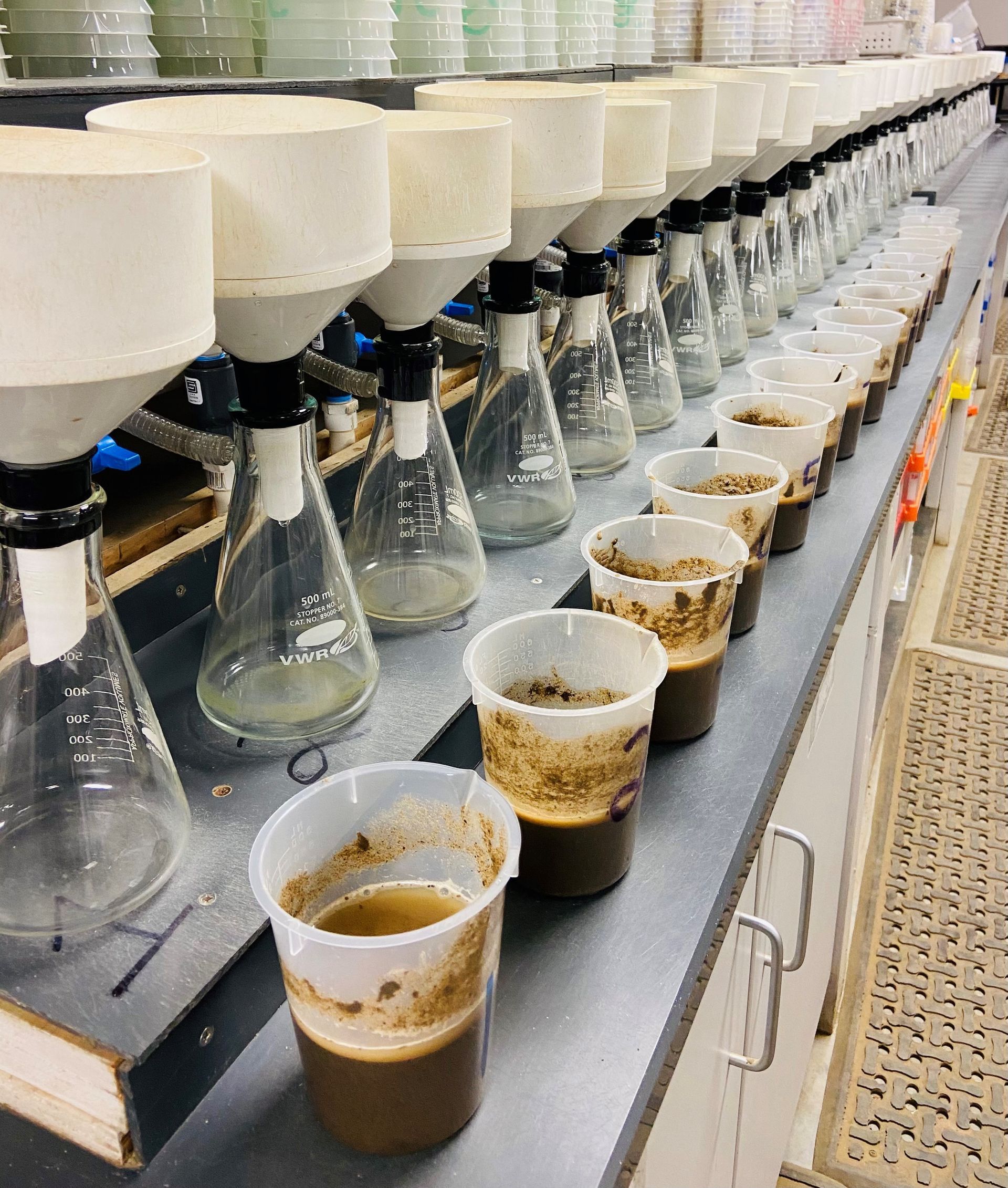


Soil Testing vs. Plant Analysis: Why Both Matter for Maximum Crop Performance
Soil testing is one of the foundational steps in building an effective fertility program. When soils test within the proper balance, you can be reasonably confident they’ll produce near their potential. But soil fertility isn’t only about what’s present in the soil, it's also about what the plant can actually use. Believe it or not, nutrients can be in the soil in good supply and still fail to show up in the plant. Why? Because nutrient uptake is influenced by balance, timing, interactions, environment, and crop health. That’s where plant tissue analysis becomes the companion tool every grower should consider.
Limitations of Only Soil Testing
A soil test gives us the best estimate of how much nutrition is available in the soil at sampling time. It's the backbone of fertilizer decision-making. However, nutrients don’t move straight from the soil into yield. One nutrient taken up in excess—or not taken up at all—can prevent the plant from using others efficiently. Yield loss can happen even in soils that look “perfect” on paper.
What Plant Tissue Analysis Tells Us
Unlike soil testing, plant analysis measures the nutrients inside the growing crop, offering a real-time picture of nutritional balance. It helps:
- Detect nutrient deficiencies before they show symptoms
- Reveal nutrient interactions; both positive and negative
- Evaluate fertilizer and management practices
- Fine-tune a fertility program beyond what a soil test alone can show
If you soil test regularly, apply recommended fertilizer rates, yet yield plateaus or disappoints, tissue testing is your next diagnostic tool. It’s a way to ‘look inside’ the plant and see what’s going right or wrong.
Before You Pull Samples, Check the Basics
Plant analysis won’t help if the crop is limited by something other than soil nutrients. Ask yourself:
- Am I planting proven varieties on time?
- Are populations and seeding rates aligned with yield goals?
- Are weeds, insects, and diseases controlled?
- Is tillage or soil structure providing a healthy root environment?
If yes, and yields are still flat, it’s time to pull tissue samples.
Understanding Variability in Plant Nutrients
Plant nutrient concentrations are not static. They vary based on:
- Genetics: hybrids and varieties uptake nutrients differently
- Growth stage: younger plants contain higher nutrient concentrations
- Plant part: newly developed leaves hold the richest nutrient levels
- Environmental stress: drought, heat, cold, compaction, insects
- Nutrient interactions: excess of one element can suppress others
- Mineral mobility: some nutrients move internally, others don’t
Because of this variability, correct sampling is crucial. Right crop, right tissue, right growth stage.
Sampling Guidelines
Avoid sampling:
- Dead, diseased, or insect-injured plants
- Plants stressed by drought, heat, cold, or saturation
- Plants heavily dusted with soil or crop protectants
- Leaves covered in fertilizer or foliar nutrients
- Crops far into the reproductive stage
- First thing in the morning or on dark, cloudy days (nitrate can spike artificially)
Best practices:
- Place samples in paper bags, not plastic (plastic can induce molding much quicker)
- Air-dry wet tissue for at least 24 hours
- Provide correct crop, variety, growth stage, and plant part on the lab submittal worksheet
- When uncertain, sample the most recently matured leaf
- Submit separate “good vs. bad” samples when diagnosing a problem
- Fill the bag, more tissue is better than not enough
One of the trickiest decisions you may face is whether a plant is nutrient-deficient, or simply diseased. For example, a soybean plant with stem or root rot will almost always test mineral-deficient, even if soil fertility is excellent. Diseased tissue clouds the results, leading to misleading conclusions.
Soil Testing + Plant Analysis = Confidence
Soil tests estimate what nutrients should be available. Plant analysis verifies what is actually getting into the crop. Together, they provide the clearest road map to:
- Diagnose nutrient problems
- Avoid unnecessary fertilizer spending
- Capture genetic yield potential
- Build long-term soil health and productivity
If your goal is truly optimized productivity and profitability, not just ‘good enough’, pair soil testing with tissue sampling. Your crop will show you what it needs when you know how to listen.
Heather Rindler, CCA
Research Agronomist
Brookside Labs | Amplify Network